

Kuzumochi
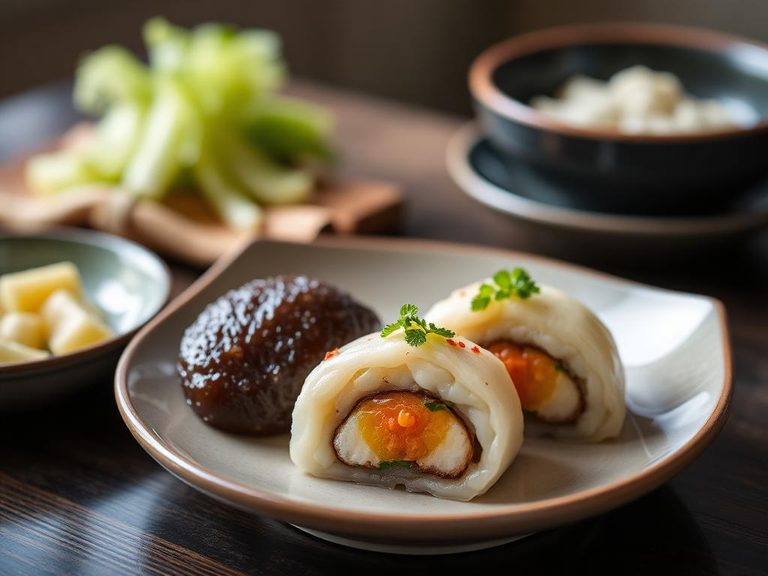
Kuzumochi is a traditional Japanese summer treat made from kuzu starch (arrowroot) and sugar, resulting in a translucent, jelly-like dessert. It is typically served chilled with a sweet black soybean syrup (kuromitsu) and kinako (roasted soybean flour), offering a refreshing and elegant texture. Originating from Kyoto, it is a beloved wagashi (Japanese confection) enjoyed during the warmer months.
🍽️ Nutrition at a glance
Kuzumochi is primarily a high-carbohydrate dish due to its starch and sugar content, with minimal fat or protein. A typical serving provides a quick source of energy and small amounts of minerals like potassium and manganese, with a calorie range of approximately 150-200 kcal per serving.
Nutrition breakdown
| Calories | 170 kcal |
| Protein | 0.5 g |
| Carbs | 42 g |
| Fat | 0.1 g |
| Fiber | 0.2 g |
| Sugar | 30 g |
| Sodium | 5 mg |
| Manganese | 0.3 mg |
| Potassium | 15 mg |
| Iron | 0.2 mg |
| Calcium | 10 mg |
| Phosphorus | 12 mg |
Per 1 piece (about 100 g) · estimated, varies by recipe
💡 What's interesting
What makes kuzumochi unique is its use of kuzu starch, which is prized in Japanese cuisine for its exceptionally smooth, melt-in-the-mouth texture and natural cooling properties, making it a perfect seasonal dessert. Nutritionally, kuzu is a traditional ingredient believed to aid digestion and soothe the stomach in East Asian herbal practices.
AI estimate may be inaccurate · Terms