

Ginanggang
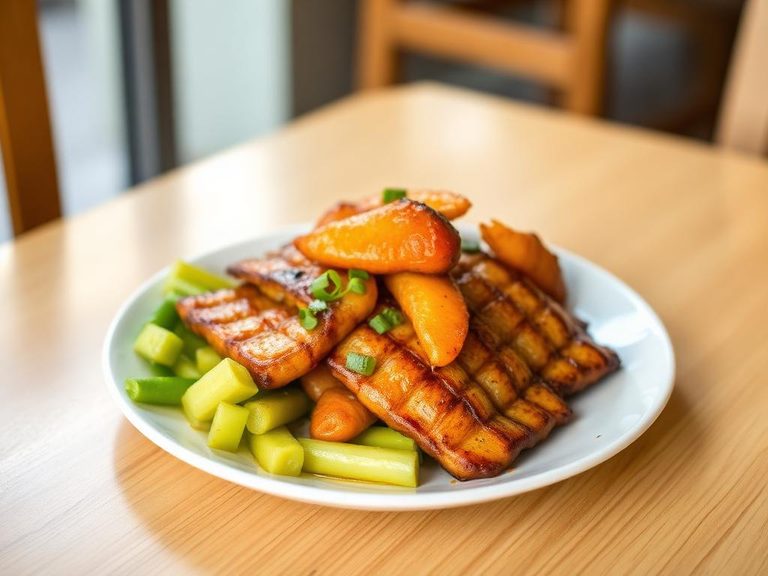
Ginanggang is a popular Filipino street food made from slices of unripe (green) jackfruit, skewered on a stick, grilled over charcoal, and then brushed with margarine or butter and rolled in brown sugar. It originates from the Mindanao region, particularly associated with Zamboanga and the Maranao people, and is a beloved snack found at street stalls and markets throughout the Philippines.
🍽️ Nutrition at a glance
As a plant-based snack, ginanggang is primarily a source of carbohydrates from both the jackfruit and the added sugar, with minimal protein and fat (unless generous margarine is used). A single skewer typically provides around 100-150 calories and offers dietary fiber, potassium, and some B vitamins from the jackfruit itself.
Nutrition breakdown
| Calories | 180 kcal |
| Protein | 3 g |
| Carbs | 38 g |
| Fat | 3.5 g |
| Fiber | 5 g |
| Sugar | 12 g |
| Sodium | 450 mg |
| Potassium | 400 mg |
| Vitamin C | 15 mg |
| Calcium | 50 mg |
| Iron | 1.5 mg |
| Magnesium | 40 mg |
| Phosphorus | 60 mg |
| Vitamin A | 20 mcg |
| Niacin (B3) | 1.0 mg |
Per 1 cup (240 g) · estimated, varies by recipe
💡 What's interesting
What makes ginanggang culturally unique is its transformation of a simple, affordable ingredient into a beloved treat through a specific grilling and seasoning technique, showcasing Filipino ingenuity with local produce. Nutritionally, it's interesting that using unripe jackfruit provides a starchy, potato-like base, making it a filling, energy-dense snack rather than a sweet fruit dish.
AI estimate may be inaccurate · Terms