

Chinese Hot Pot
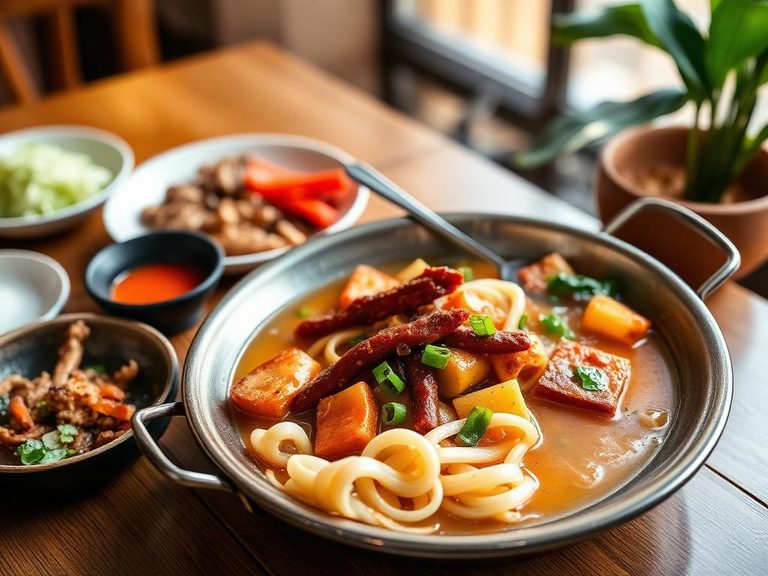
Chinese hot pot is a communal, interactive dining experience where diners cook a variety of raw ingredients at the table in a shared pot of simmering, flavorful broth. It typically features thinly sliced meats, seafood, vegetables, tofu, noodles, and dumplings, with a wide array of dipping sauces. Originating from China, particularly associated with Sichuan and Chongqing styles, it's a beloved social meal enjoyed across the country and internationally.
🍽️ Nutrition at a glance
A typical serving is high in protein from the meats and seafood, with moderate fat content depending on the broth and cooking oils, and carbohydrates primarily from noodles, dumplings, and starchy vegetables. It provides key nutrients like iron, B vitamins, and fiber, with a rough calorie ballpark of 500-800 per person, varying widely based on ingredients and portion sizes.
Nutrition breakdown
| Calories | 450 kcal |
| Protein | 25 g |
| Carbs | 40 g |
| Fat | 22 g |
| Fiber | 6 g |
| Sugar | 4 g |
| Sodium | 1800 mg |
| Potassium | 800 mg |
| Iron | 4 mg |
| Calcium | 100 mg |
| Vitamin A | 150 mcg RAE |
| Vitamin C | 25 mg |
| Vitamin B12 | 3 mcg |
| Zinc | 3 mg |
| Magnesium | 60 mg |
Per 1 bowl (600 g) · estimated, varies by recipe
💡 What's interesting
Culturally, hot pot embodies the Chinese values of sharing, community, and togetherness, often serving as a centerpiece for family gatherings and celebrations. Nutritionally, its interactive cooking method allows for customization, letting diners control their intake of fresh, minimally processed ingredients, making it a potentially balanced meal when thoughtfully composed.
🍽️ Related dishes
AI estimate may be inaccurate · Terms