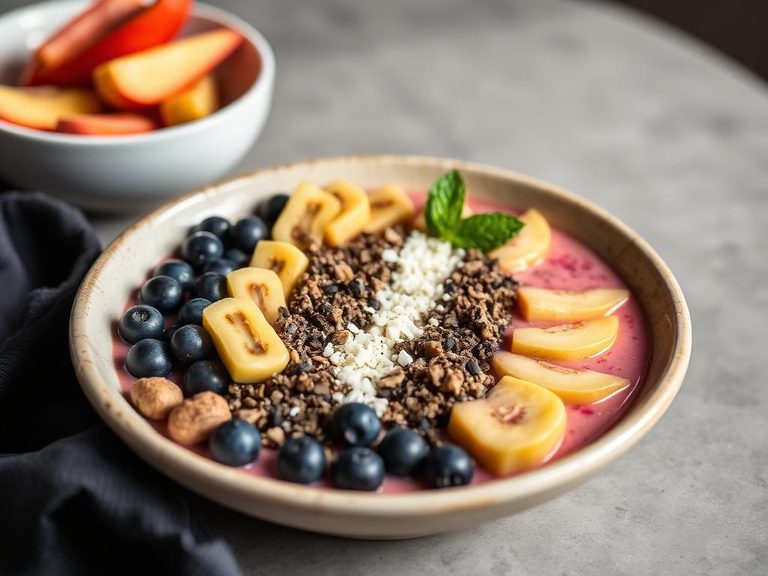
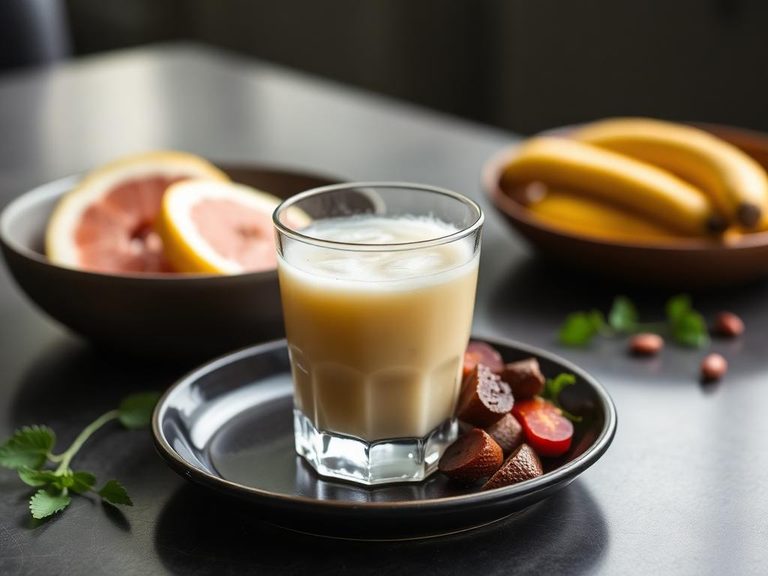
Blended into a post-workout smoothie
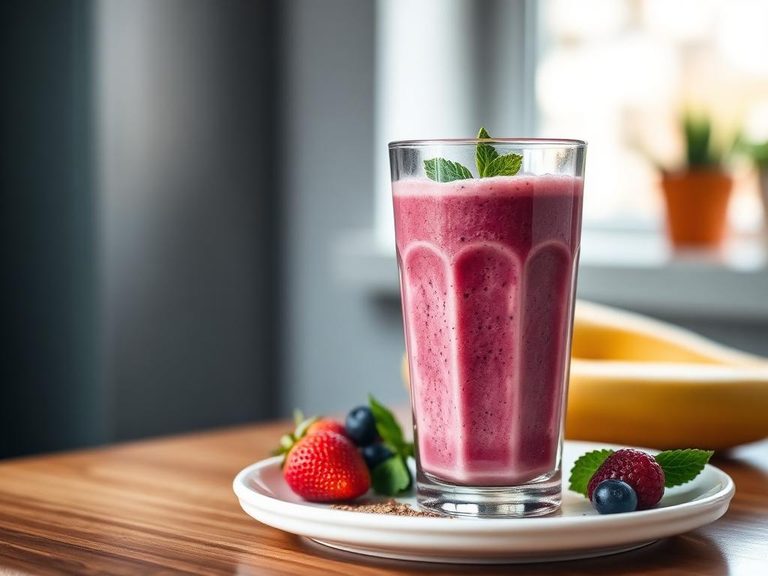
A post-workout smoothie is a blended beverage typically made with a liquid base (like milk, almond milk, or coconut water), a protein source (such as whey or plant-based powder), fruits (like bananas or berries), and sometimes vegetables or healthy fats. It's a modern, convenient creation popularized in fitness and wellness circles globally.
🍽️ Nutrition at a glance
It's generally high in carbohydrates for glycogen replenishment and protein for muscle repair, with a moderate amount of fat depending on ingredients. A typical serving provides key nutrients like potassium, vitamins, and electrolytes, and ranges from 250 to 500 calories.
Nutrition breakdown
| Calories | 350 kcal |
| Protein | 25 g |
| Carbs | 45 g |
| Fat | 8 g |
| Fiber | 6 g |
| Sugar | 30 g |
| Sodium | 150 mg |
| Potassium | 600 mg |
| Calcium | 300 mg |
| Magnesium | 80 mg |
| Iron | 3 mg |
| Vitamin C | 45 mg |
| Vitamin A | 300 mcg |
| Vitamin D | 2 mcg |
| Vitamin B12 | 1.5 mcg |
Per 1 smoothie (approx. 400 g) · estimated, varies by recipe
💡 What's interesting
Culturally, it represents the fusion of nutrition science and convenience culture, turning the concept of a 'recovery meal' into a quick, drinkable format. Nutritionally, its unique aspect is the customizable balance of macros tailored specifically to post-exercise needs.