

Umeboshi
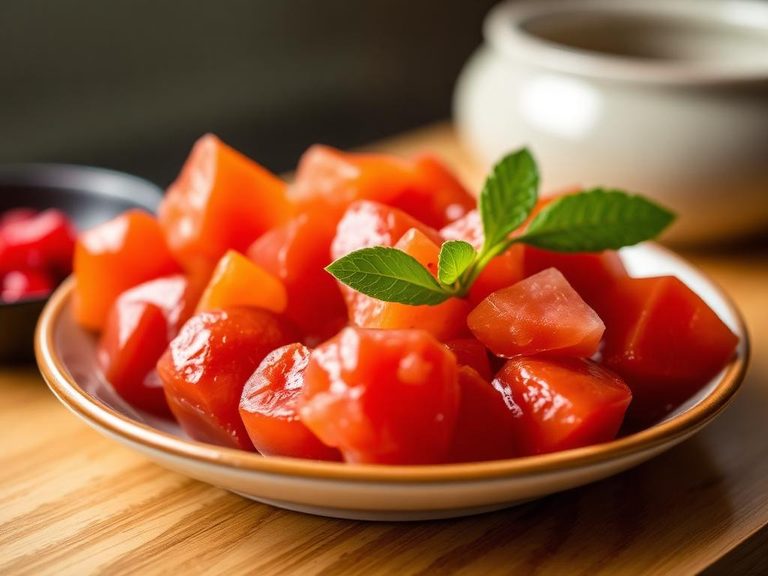
Umeboshi are traditional Japanese pickled plums, made by salting and sun-drying unripe ume fruits, often with red shiso leaves for color and flavor. They are a staple in Japanese cuisine, known for their intensely sour and salty taste, and are commonly enjoyed with rice or as a filling in onigiri (rice balls).
🍳 View the full Umeboshi recipe →
🍽️ Nutrition at a glance
Umeboshi is very low in calories, fat, and protein, but is high in sodium due to the salting process. It provides small amounts of minerals like potassium and is often cited for its citric acid content, which may aid digestion.
Nutrition breakdown
| Calories | 3 kcal |
| Protein | 0.1 g |
| Carbs | 0.8 g |
| Fat | 0 g |
| Fiber | 0.2 g |
| Sugar | 0.1 g |
| Sodium | 270 mg |
| Sodium | 270 mg |
| Potassium | 40 mg |
| Calcium | 5 mg |
| Iron | 0.1 mg |
| Vitamin A | 2 µg RAE |
| Vitamin C | 0.5 mg |
| Manganese | 0.02 mg |
| Niacin (B3) | 0.05 mg |
Per 1 piece (approx. 15 g) · estimated, varies by recipe
💡 What's interesting
Culturally, umeboshi is deeply embedded in Japanese tradition, believed to have restorative properties and historically used as a natural preservative. Its unique sour-salty flavor profile makes it a polarizing but iconic ingredient, often described as an acquired taste that embodies the concept of 'umami' in a different form.
🍽️ Related dishes

AI estimate may be inaccurate · Terms