

Tofu no hiraki
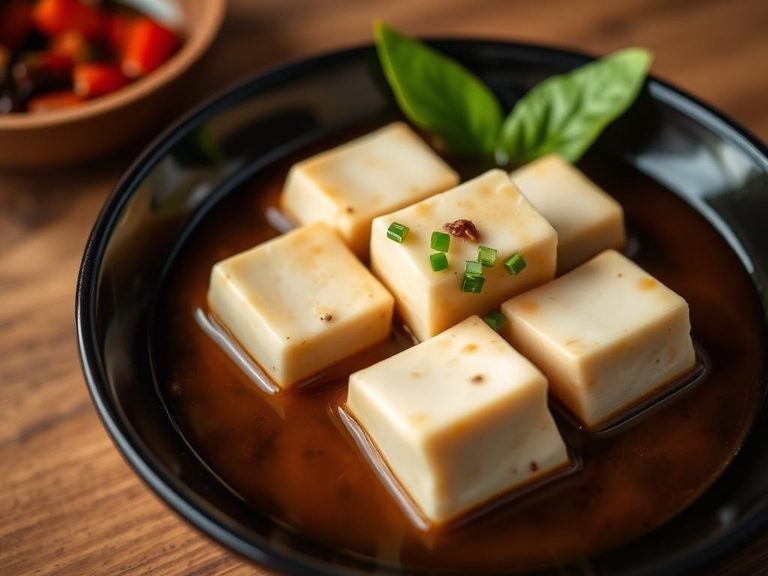
Tofu no hiraki is a traditional Japanese dish of simmered tofu, gently cooked in a savory broth of dashi (fish or kelp stock) and soy sauce. It features soft or firm tofu as the primary ingredient, often with minimal additions like grated ginger or scallions. The dish is a staple in Japanese home cooking and Buddhist temple cuisine (shōjin ryōri).
🍽️ Nutrition at a glance
This dish is a good source of plant-based protein and is generally low in fat and carbohydrates. It provides essential nutrients like calcium, iron, and manganese from the tofu, with a typical serving containing around 100-150 calories.
Nutrition breakdown
| Calories | 120 kcal |
| Protein | 10 g |
| Carbs | 5 g |
| Fat | 6 g |
| Fiber | 2 g |
| Sugar | 2 g |
| Sodium | 450 mg |
| Calcium | 250 mg |
| Iron | 2.5 mg |
| Manganese | 1.2 mg |
| Selenium | 10 mcg |
| Copper | 0.3 mg |
| Phosphorus | 120 mg |
| Magnesium | 40 mg |
| Zinc | 1.5 mg |
Per 1 cup (240 g) · estimated, varies by recipe
💡 What's interesting
Culturally, it exemplifies the Japanese principle of 'shun' (using ingredients at their peak) and the minimalist 'ichigo ichie' approach to highlighting a single ingredient's flavor. Nutritionally, the simmering process allows the tofu to absorb the umami-rich broth, enhancing its flavor without adding significant calories or fat.
🍽️ Related dishes

AI estimate may be inaccurate · Terms