

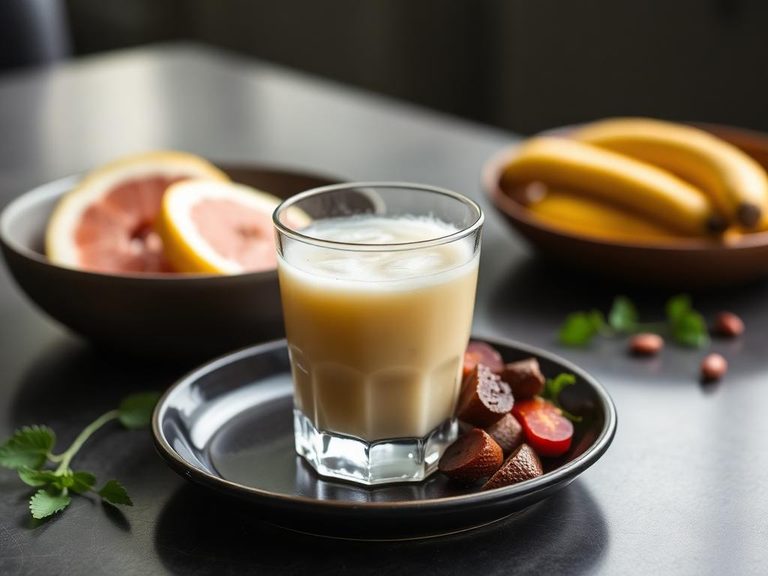
Post-play recovery drink

A post-play recovery drink is a beverage specifically formulated to help athletes and active individuals replenish energy and nutrients after physical exertion. It typically features a blend of fast-digesting carbohydrates (like dextrose or maltodextrin) and high-quality proteins (such as whey), often enhanced with electrolytes like sodium and potassium. While its exact origins are tied to the rise of sports science in the late 20th century, it is now a globally recognized staple in fitness and athletic communities.
🍳 View the full Post-play recovery drink recipe →
🍽️ Nutrition at a glance
This drink is primarily high in carbohydrates to rapidly restore glycogen stores and contains a moderate to high amount of protein to support muscle repair. Key nutrients include electrolytes for rehydration and branched-chain amino acids (BCAAs) for muscle synthesis. A typical serving usually ranges from 150 to 300 calories, depending on the specific formulation and serving size.
Nutrition breakdown
| Calories | 150 kcal |
| Protein | 20 g |
| Carbs | 25 g |
| Fat | 2 g |
| Fiber | 1 g |
| Sugar | 18 g |
| Sodium | 100 mg |
| Potassium | 350 mg |
| Calcium | 200 mg |
| Magnesium | 50 mg |
| Phosphorus | 150 mg |
| Vitamin B6 | 0.5 mg |
| Vitamin B12 | 1.0 mcg |
| Vitamin C | 30 mg |
| Vitamin D | 2.0 mcg |
Per 1 cup (240 g) · estimated, varies by recipe
💡 What's interesting
What makes this drink nutritionally unique is its precise 'anabolic window' timing—it's designed to be consumed immediately after exercise when muscles are most receptive to nutrient uptake. Culturally, it represents the intersection of food science and athletic performance, evolving from simple homemade mixtures to a sophisticated, multi-billion dollar global industry.
🍽️ Related dishes







AI estimate may be inaccurate · Terms