

Piri Piri sauce
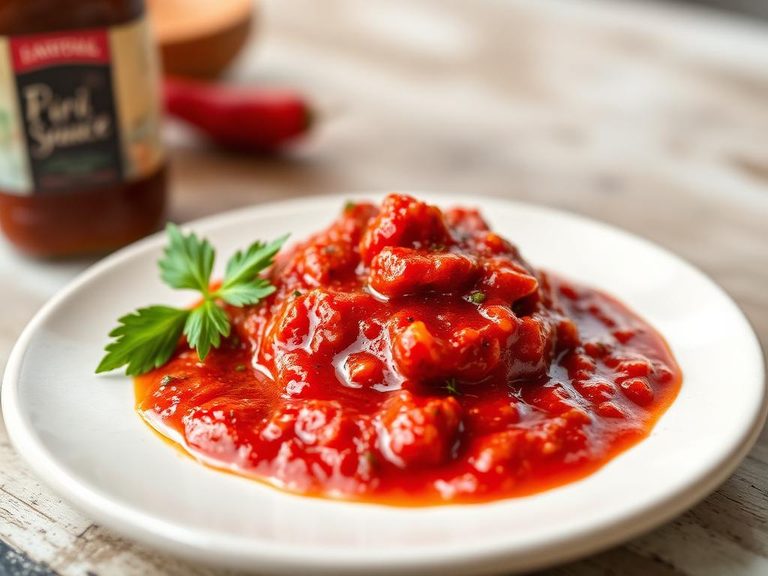
Piri Piri sauce is a fiery, tangy condiment originating from Portuguese and African culinary traditions, particularly popular in countries like Mozambique, Angola, and Portugal. It is typically made from crushed piri piri chili peppers, citrus juice, garlic, herbs, and oil, creating a vibrant and spicy flavor profile.
🍳 View the full Piri Piri sauce recipe →
🍽️ Nutrition at a glance
Piri Piri sauce is generally low in carbohydrates and protein, with most of its calories coming from healthy fats in the oil base. It provides capsaicin from the chilies, which may boost metabolism, and offers a modest amount of vitamins A and C, with a typical serving containing around 50-80 calories.
Nutrition breakdown
| Calories | 20 kcal |
| Protein | 0.5 g |
| Carbs | 3 g |
| Fat | 1 g |
| Fiber | 0.5 g |
| Sugar | 2 g |
| Sodium | 350 mg |
| Vitamin A | 150 mcg RAE |
| Vitamin C | 10 mg |
| Vitamin E | 0.5 mg |
| Vitamin B6 | 0.05 mg |
| Iron | 0.5 mg |
| Potassium | 80 mg |
| Magnesium | 5 mg |
| Manganese | 0.1 mg |
Per 2 tablespoons (30 g) · estimated, varies by recipe
💡 What's interesting
Culturally, Piri Piri sauce represents a fascinating fusion of Portuguese colonial influence and African ingredients, becoming a national symbol in countries like Mozambique. Nutritionally, the capsaicin in the chilies not only adds heat but also has potential anti-inflammatory and metabolism-boosting properties.
🍽️ Related dishes
AI estimate may be inaccurate · Terms