

Paniqtuq
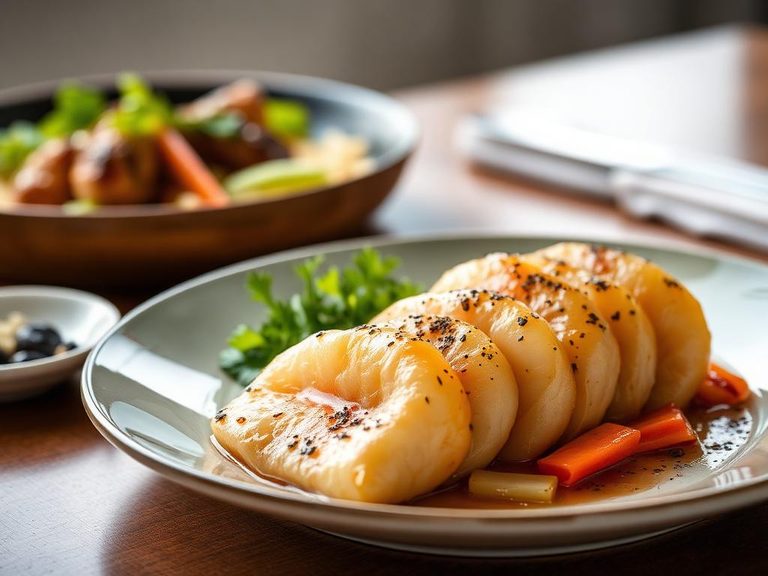
Paniqtuq is a traditional Inuit dish from the Arctic regions of Canada and Greenland, made from raw, frozen Arctic char or salmon. The fish is typically cut into chunks, frozen solid, and then shaved or scraped into thin, snow-like flakes, which are eaten raw and often seasoned with a little seal oil or salt.
🍽️ Nutrition at a glance
This dish is very high in protein and healthy fats, particularly omega-3 fatty acids, while being virtually carbohydrate-free. A typical serving provides a significant amount of energy, roughly in the 250-350 calorie range, depending on the portion and added oils.
Nutrition breakdown
| Calories | 300 kcal |
| Protein | 32 g |
| Carbs | 0 g |
| Fat | 18 g |
| Fiber | 0 g |
| Sugar | 0 g |
| Sodium | 60 mg |
| Vitamin D | 15 mcg |
| Omega-3 (EPA+DHA) | 2.5 g |
| Vitamin B12 | 8 mcg |
| Selenium | 40 mcg |
| Phosphorus | 350 mg |
| Niacin (B3) | 10 mg |
| Potassium | 450 mg |
| Vitamin B6 | 0.6 mg |
Per 1 cup (150 g) of shaved, raw frozen fish · estimated, varies by recipe
💡 What's interesting
Paniqtuq is a remarkable example of a nutrient-dense, raw food preserved by natural freezing in an extreme environment. It serves as a critical source of essential fatty acids and vitamin D for Arctic communities, especially during long winters.
AI estimate may be inaccurate · Terms