

Chebureki
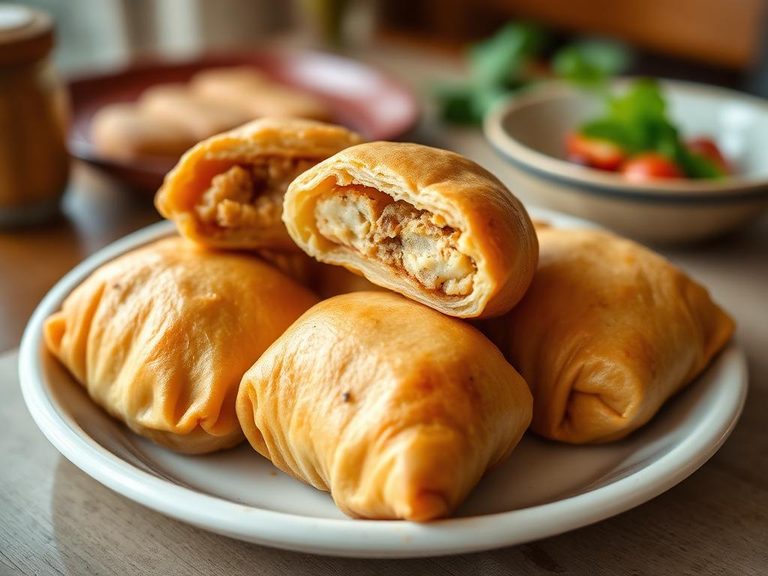
Chebureki are crispy, half-moon-shaped fried turnovers originating from the Crimean Peninsula and popular across the post-Soviet region. They are typically made from a thin, unleavened dough filled with a juicy mixture of minced meat (often beef or lamb) and onions, though regional variations like the Crimean Tatar style sometimes feature a potato filling. The turnovers are deep-fried until golden and flaky, resulting in a savory, handheld pastry.
🍽️ Nutrition at a glance
Chebureki are high in both carbohydrates from the dough and fat from deep-frying, making them a calorie-dense food, with a single medium-sized piece often containing around 300-400 calories. They provide a good source of protein from the meat filling, along with iron and B vitamins, but are relatively low in fiber and micronutrients unless accompanied by fresh vegetables.
Nutrition breakdown
| Calories | 380 kcal |
| Protein | 12 g |
| Carbs | 30 g |
| Fat | 24 g |
| Fiber | 2 g |
| Sugar | 2 g |
| Sodium | 480 mg |
| Iron | 2.5 mg |
| Potassium | 300 mg |
| Phosphorus | 180 mg |
| Vitamin B1 (Thiamine) | 0.2 mg |
| Vitamin B2 (Riboflavin) | 0.15 mg |
| Niacin (B3) | 3.5 mg |
| Calcium | 40 mg |
| Magnesium | 25 mg |
Per 1 piece (approx. 150 g) · estimated, varies by recipe
💡 What's interesting
Culinarily, chebureki are a fascinating example of how a simple, portable dish can become a beloved street food staple across diverse cultures, with each region adapting the filling to local tastes. Nutritionally, their high fat and calorie content reflects their historical role as a hearty, energy-providing meal for travelers and workers in the region.
AI estimate may be inaccurate · Terms