Borage Flower Garnish for G&Ts and Salads
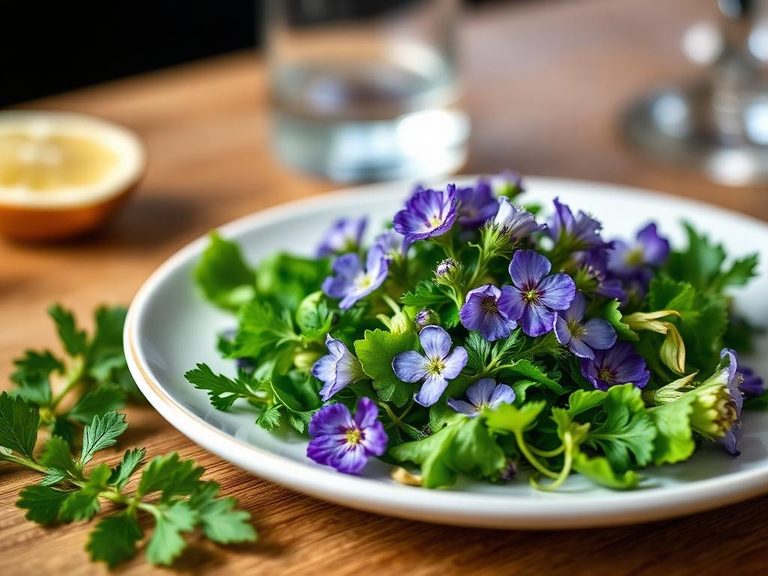
Borage flower garnish refers to the use of fresh, vibrant blue, star-shaped blossoms from the borage plant (Borago officinalis) to enhance the visual appeal and flavor of beverages and dishes. The flowers have a fresh, cucumber-like taste and are commonly used in gin and tonics, salads, and as a decorative element in various culinary preparations. This herb is native to the Mediterranean region and has been used in European cuisine for centuries.
🍽️ Nutrition at a glance
Borage flowers are very low in calories, carbohydrates, fat, and protein, making them a light garnish rather than a significant nutritional source. They do provide small amounts of vitamins and minerals, particularly vitamin C and potassium, contributing to overall nutrient intake in a minimal way.
Nutrition breakdown
| Calories | 5 kcal |
| Protein | 0.2 g |
| Carbs | 0.8 g |
| Fat | 0.1 g |
| Fiber | 0.3 g |
| Sugar | 0.2 g |
| Sodium | 1 mg |
| Vitamin C | 5 mg |
| Potassium | 30 mg |
| Calcium | 10 mg |
| Iron | 0.2 mg |
| Magnesium | 3 mg |
| Vitamin A | 2 mcg |
Per 1/4 cup (about 10 g) of fresh borage flowers · estimated, varies by recipe
💡 What's interesting
Borage flowers are unique for their striking blue color and cucumber-like flavor, which can add a refreshing and visually appealing touch to drinks and salads. Historically, borage has been associated with courage and was often added to wine or spirits to boost morale, a tradition that continues in modern cocktail culture.