

Beshbarmak
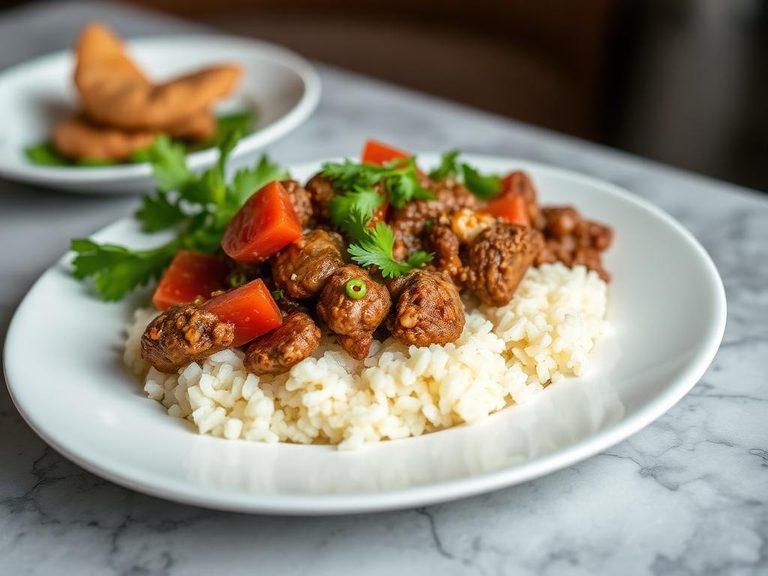
Beshbarmak is the national dish of Kazakhstan and a beloved staple across Central Asia, consisting of boiled meat (typically horse, lamb, or beef) served over wide, flat homemade noodles and smothered in a rich, savory onion broth. The name translates to 'five fingers' as it is traditionally eaten by hand, symbolizing a communal and celebratory meal.
🍽️ Nutrition at a glance
This dish is high in protein and fat due to its generous meat content, providing substantial energy and essential amino acids. A typical serving offers a good source of iron, zinc, and B vitamins, with a calorie range of approximately 600-800 kcal depending on the cut of meat and portion size.
Nutrition breakdown
| Calories | 720 kcal |
| Protein | 45 g |
| Carbs | 40 g |
| Fat | 42 g |
| Fiber | 2 g |
| Sugar | 3 g |
| Sodium | 850 mg |
| Iron | 5.2 mg |
| Zinc | 8.5 mg |
| Vitamin B12 | 3.8 mcg |
| Potassium | 620 mg |
| Phosphorus | 380 mg |
| Niacin (B3) | 12.5 mg |
| Selenium | 35 mcg |
| Vitamin B6 | 0.8 mg |
Per 1 typical serving (350 g) · estimated, varies by recipe
💡 What's interesting
Beshbarmak is deeply embedded in Kazakh hospitality and ritual, often served to honored guests and at significant life events like weddings or funerals. Its communal preparation and hand-eaten tradition reinforce social bonds and cultural identity, making it as much a social experience as a culinary one.
AI estimate may be inaccurate · Terms