

Mixed organ stew
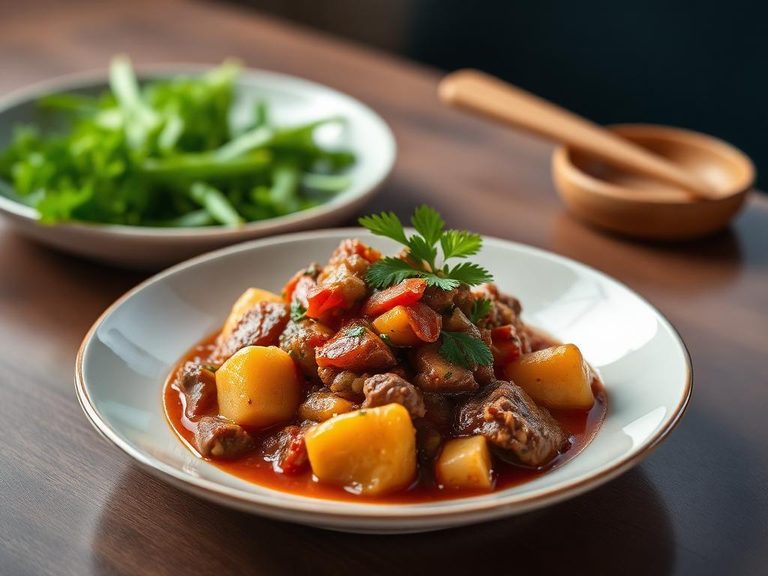
Mixed organ stew is a hearty, savory dish made from a variety of animal offal (such as liver, heart, kidneys, and sometimes tripe) simmered slowly in a flavorful broth. It is a traditional comfort food found in many cuisines worldwide, from Chinese 'lu wei' and Korean 'gopchang' to Eastern European 'flaki' and Mexican 'panza'.
🍽️ Nutrition at a glance
This dish is exceptionally high in protein and rich in essential nutrients, particularly iron, B vitamins, and zinc, while its fat content can vary depending on the specific organs and cooking method. A typical serving provides a substantial amount of calories, often in the 300-450 kcal range.
Nutrition breakdown
| Calories | 380 kcal |
| Protein | 32 g |
| Carbs | 8 g |
| Fat | 22 g |
| Fiber | 2 g |
| Sugar | 3 g |
| Sodium | 650 mg |
| Iron | 6.5 mg |
| Vitamin B12 | 18 µg |
| Zinc | 5.8 mg |
| Vitamin A | 450 µg RAE |
| Riboflavin (B2) | 2.1 mg |
| Niacin (B3) | 10 mg |
| Phosphorus | 320 mg |
| Selenium | 45 µg |
Per 1 cup (240 g) · estimated, varies by recipe
💡 What's interesting
Culturally, it's a prime example of 'nose-to-tail' eating, promoting sustainability by utilizing the whole animal. Nutritionally, organ meats are among the most nutrient-dense foods available, offering concentrated doses of vitamins and minerals that are often scarce in muscle meats.
AI estimate may be inaccurate · Terms