

Kabutoyaki
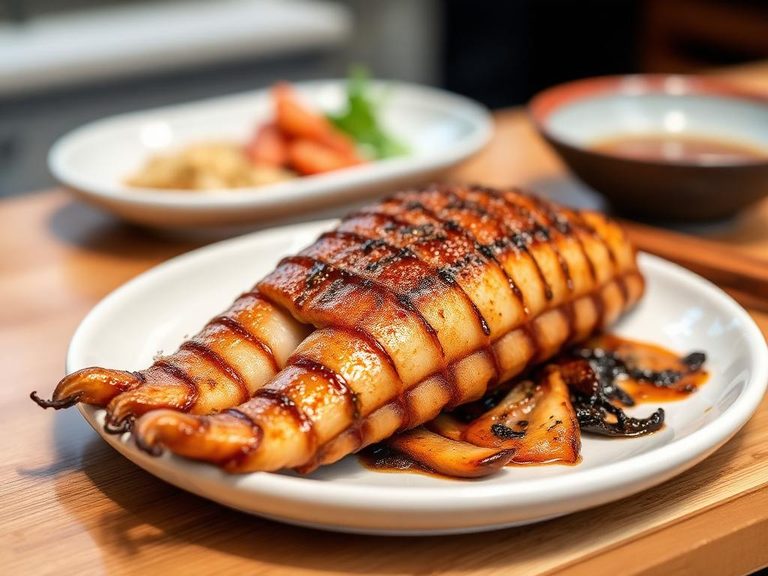
Kabutoyaki is a traditional Japanese dish consisting of a whole grilled eel head, often seasoned with salt or a sweet soy-based tare sauce. It is a specialty in regions known for eel, such as Nagoya and the Kantō area, where eel is a celebrated local ingredient.
🍽️ Nutrition at a glance
This dish is high in protein and healthy fats, particularly omega-3 fatty acids from the eel, while being very low in carbohydrates. A typical serving provides around 150-200 calories, along with essential nutrients like vitamin A, vitamin B12, and calcium.
Nutrition breakdown
| Calories | 230 kcal |
| Protein | 18 g |
| Carbs | 2 g |
| Fat | 17 g |
| Fiber | 0 g |
| Sugar | 0 g |
| Sodium | 320 mg |
| Vitamin A | 120 µg RAE |
| Vitamin B12 | 15 µg |
| Vitamin D | 8 µg |
| Vitamin E | 2.5 mg |
| Omega-3 (EPA+DHA) | 1.2 g |
| Selenium | 35 µg |
| Phosphorus | 220 mg |
| Zinc | 4 mg |
Per 1 piece (approx. 100 g) · estimated, varies by recipe
💡 What's interesting
In Japanese culture, eating eel is traditionally associated with boosting stamina during the hot summer months, especially on the 'Day of the Ox.' Nutritionally, the eel head is prized for its rich collagen content, which is believed to benefit skin and joint health.
AI estimate may be inaccurate · Terms