Tsukemen (dipping noodles)
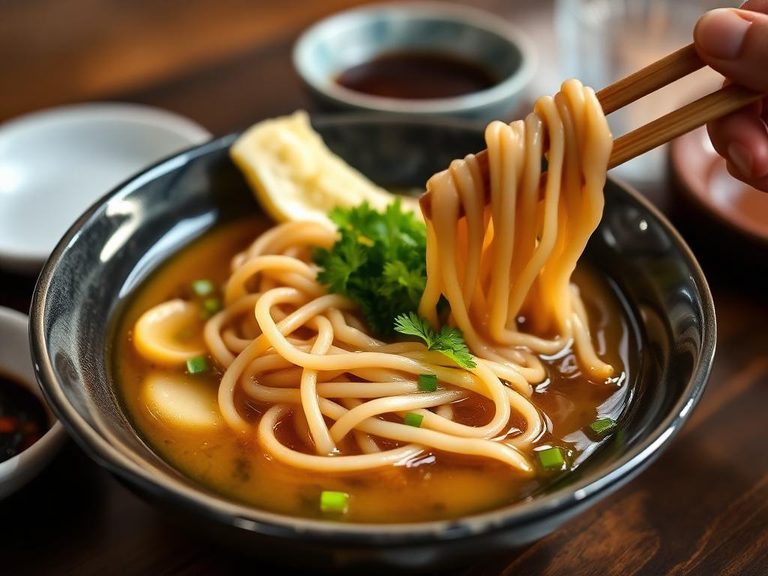
AI-generated illustration
Tsukemen is a Japanese ramen dish where cold or room-temperature noodles are served separately from a hot, concentrated dipping broth. The noodles are typically thick, chewy wheat noodles, while the broth is often a rich, savory fish or pork-based soup with toppings like chashu pork, menma (bamboo shoots), nori seaweed, and a soft-boiled egg. It originated in Tokyo in the 1960s as a creative variation of traditional ramen.
🍽️ Nutrition at a glance
Tsukemen is generally high in carbohydrates from the noodles and can be high in fat and protein depending on the broth and toppings, with a typical serving ranging from 600 to over 1,000 calories. It provides substantial energy, along with minerals like sodium from the broth and some vitamins from the egg and vegetables.
💡 What's interesting
Culturally, tsukemen is unique because it allows diners to control the flavor intensity by dipping noodles into the broth, and it's common to ask for 'soup-wari'—adding hot broth to the leftover dipping sauce to drink as a soup. Nutritionally, the separation of noodles and broth can help maintain noodle texture and allows for a more customizable balance of flavors and textures in each bite.