Sushi rolls (Japanese maki)
AI-generated illustration
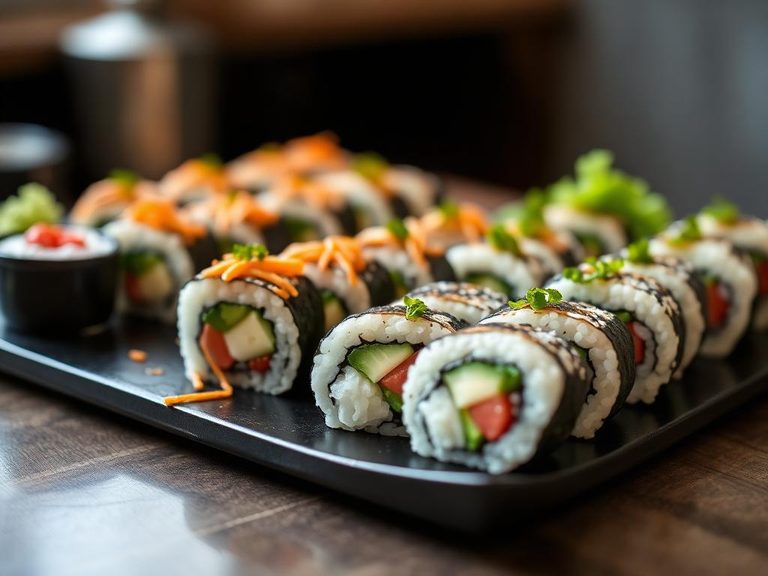
Sushi rolls, or maki, are a classic Japanese dish where vinegared rice and fillings like fresh fish, vegetables, or egg are wrapped in a sheet of seaweed (nori) and sliced into bite-sized rounds. They come in various styles, from simple cucumber rolls to elaborate dragon rolls with multiple layers. Originating in Japan, maki has become a global favorite, often served in sushi restaurants or as a popular takeaway meal.
🍽️ Nutrition at a glance
Sushi rolls are generally balanced, with carbs from the rice, protein from fish or tofu, and healthy fats from ingredients like avocado or salmon. A typical serving (about 6-8 pieces) provides roughly 300-500 calories, along with nutrients like omega-3 fatty acids, vitamins from seaweed, and minerals from seafood.
💡 What's interesting
Culturally, maki represents the Japanese principle of 'washoku'—harmonious, seasonal eating—where each roll balances flavors, textures, and colors. Nutritionally, the use of fermented rice vinegar in sushi rice not only adds flavor but may also aid digestion, making it a uniquely functional component of the dish.