Stir-fry (Chinese, Korean)
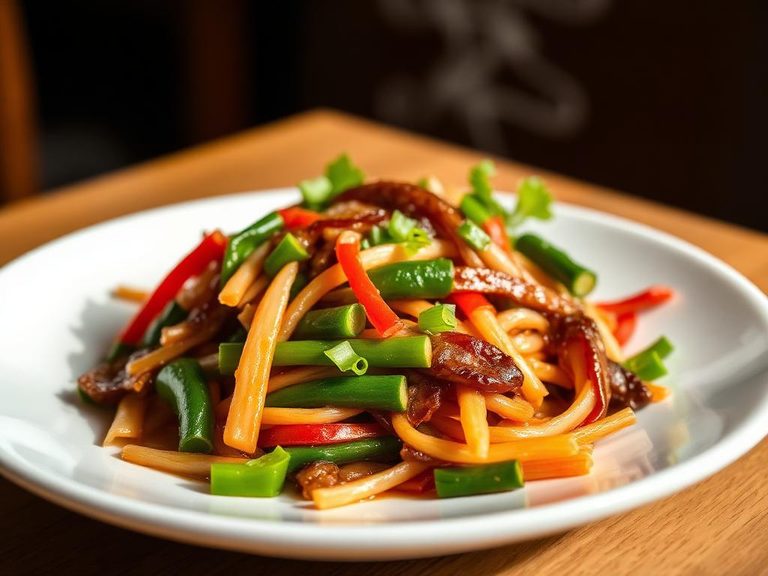
AI-generated illustration
Stir-frying is a signature high-heat cooking technique in both Chinese and Korean cuisines, where bite-sized ingredients are rapidly tossed in a wok or pan with oil and seasonings. Common ingredients include sliced meats (like pork, chicken, or beef), a wide variety of vegetables (such as bell peppers, broccoli, and bean sprouts), and aromatics like garlic and ginger, often bound together with a savory sauce. This method is a cornerstone of daily home cooking and restaurant fare across East Asia.
🍽️ Nutrition at a glance
A typical serving is balanced, providing protein from the meat or tofu, carbohydrates from any added noodles or rice, and a range of vitamins and minerals from the vegetables. Due to the use of cooking oil, it can be moderate in fat, but the quick cooking helps retain the crispness and nutritional value of the vegetables. A standard plate generally falls in the range of 400-600 calories, depending on the specific ingredients and sauce.
💡 What's interesting
The technique of stir-frying is believed to have originated in China and is celebrated for its speed and efficiency, symbolizing the harmony of 'wok hei' or the 'breath of the wok.' In Korea, similar methods are used for dishes like 'bokkeum,' where the focus is often on achieving a perfect balance of sweet, spicy, and savory flavors, showcasing the cuisine's emphasis on fermented pastes and bold seasonings.