Schweinshaxe (German Roasted Pork Knuckle)
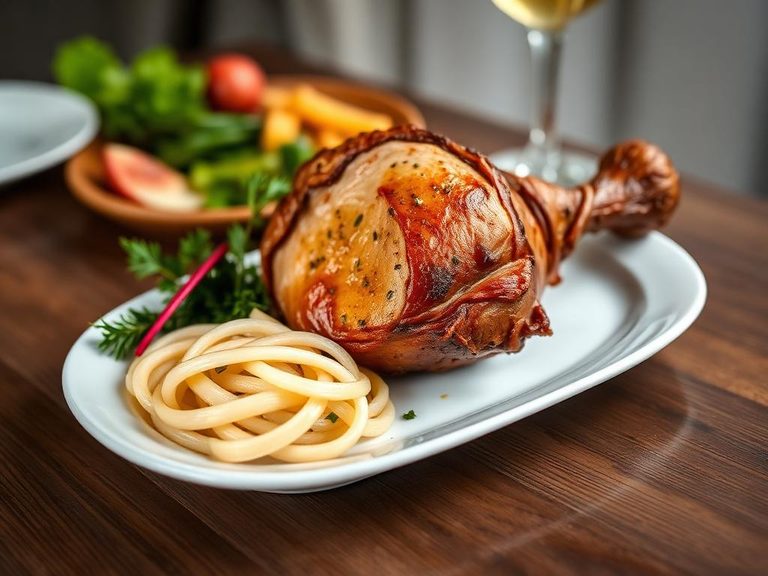
AI-generated illustration
Schweinshaxe is a traditional German dish, particularly famous in Bavaria, featuring a whole pork knuckle (shank) that is typically braised or roasted until the meat is tender and the skin becomes a deep, crackling golden brown. The key ingredients are the pork knuckle itself, often seasoned with caraway seeds, garlic, and salt, and served with hearty sides like potato dumplings (Klöße) and sauerkraut.
🍽️ Nutrition at a glance
This dish is very high in protein and fat, with minimal carbohydrates unless served with starchy sides. A typical serving provides significant amounts of B vitamins (especially B12), zinc, and iron from the pork, and can range from 800 to over 1,200 calories depending on the portion size and preparation method.
💡 What's interesting
Culturally, Schweinshaxe is a quintessential centerpiece of German beer hall cuisine, symbolizing hearty, communal feasting. Nutritionally, while calorie-dense, the slow-cooking process renders much of the fat, and the collagen-rich knuckle can be a good source of gelatin, which is often associated with benefits for joint and digestive health.