Onigiri (Rice Balls)
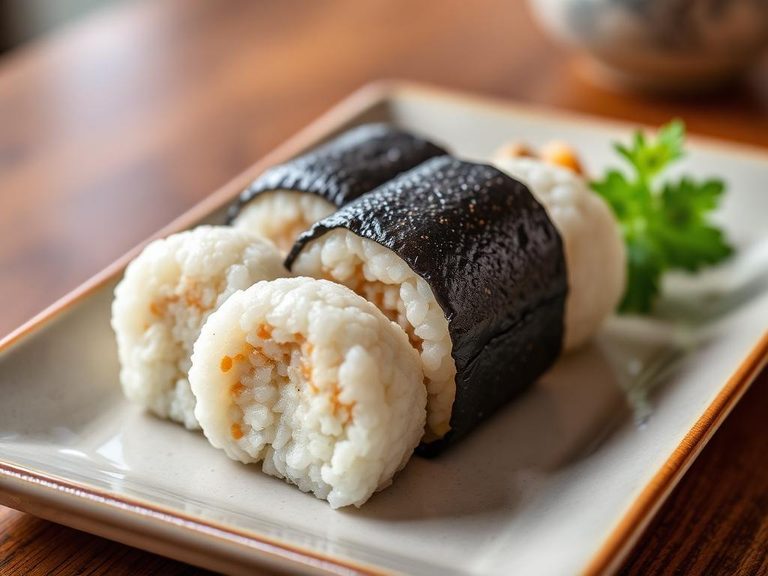
AI-generated illustration
Onigiri are Japanese rice balls, a beloved and portable snack or meal made from short-grain white rice molded into various shapes, often triangular or cylindrical. They are typically wrapped in nori (dried seaweed) and filled with savory ingredients like pickled plum (umeboshi), salted salmon, or seasoned kelp. This simple yet satisfying dish is a staple of Japanese cuisine, commonly found in bento boxes and convenience stores.
🍽️ Nutrition at a glance
Onigiri is primarily a high-carbohydrate food, providing quick energy from the rice, with a moderate amount of protein if filled with fish or meat. A standard rice ball offers key nutrients like B vitamins and iron, with a calorie count that typically ranges from 150 to 250 calories per serving, depending on the filling and size.
💡 What's interesting
Culturally, onigiri is deeply ingrained in Japanese life as a symbol of home-cooked care and a practical, eco-friendly food wrapped in biodegradable seaweed. Nutritionally, its simple, whole-food composition makes it a wholesome and easily digestible option, often enjoyed as a balanced snack or light meal.