Baklava (in some regional variants)
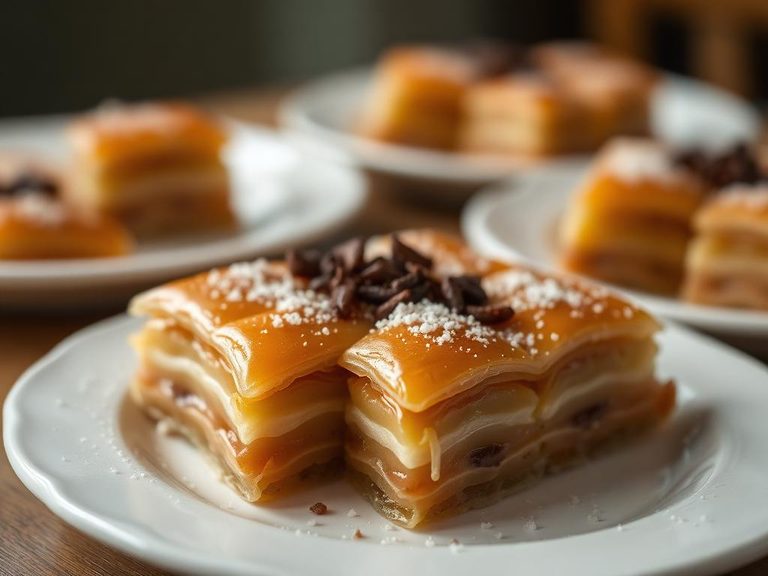
AI-generated illustration
Baklava is a rich, sweet pastry made of layers of thin, flaky phyllo dough filled with chopped nuts—commonly walnuts, pistachios, or almonds—and sweetened with syrup or honey. Its origins are widely debated across the Middle East, Balkans, and Mediterranean, with notable regional variants like Turkish, Greek, and Persian versions, each with distinct nut blends and spice notes.
🍽️ Nutrition at a glance
Baklava is high in both carbohydrates and fat, primarily from the buttery phyllo layers and nut filling, with a moderate amount of protein from the nuts. A typical 100-gram serving can range from 400 to 500 calories, offering minerals like magnesium and antioxidants from nuts, but it is best enjoyed in moderation due to its sugar and calorie density.
💡 What's interesting
Culturally, baklava is often associated with celebrations and hospitality in many regions, and its preparation can be a communal activity. Nutritionally, while it's indulgent, the nuts provide beneficial fats and fiber, making it a more nutrient-dense treat compared to many other desserts.